SPC vs LVT Flooring: What’s the Difference and Which Is Better for Your Home?
If you’re looking to compare SPC and LVT flooring, you’re already looking at two of the most practical options for modern homes. Both are durable, water-resistant vinyl floors with plenty of style choices, but they’re not built in the same way. That difference in construction can affect how the floor feels underfoot, how it handles busy rooms, and which type of fitting makes the most sense in your space.
In this guide, we’ll go over the core composition of each, installation differences, where each option works best and much more - so we can help you choose with confidence based on your home, your routine, and your priorities!
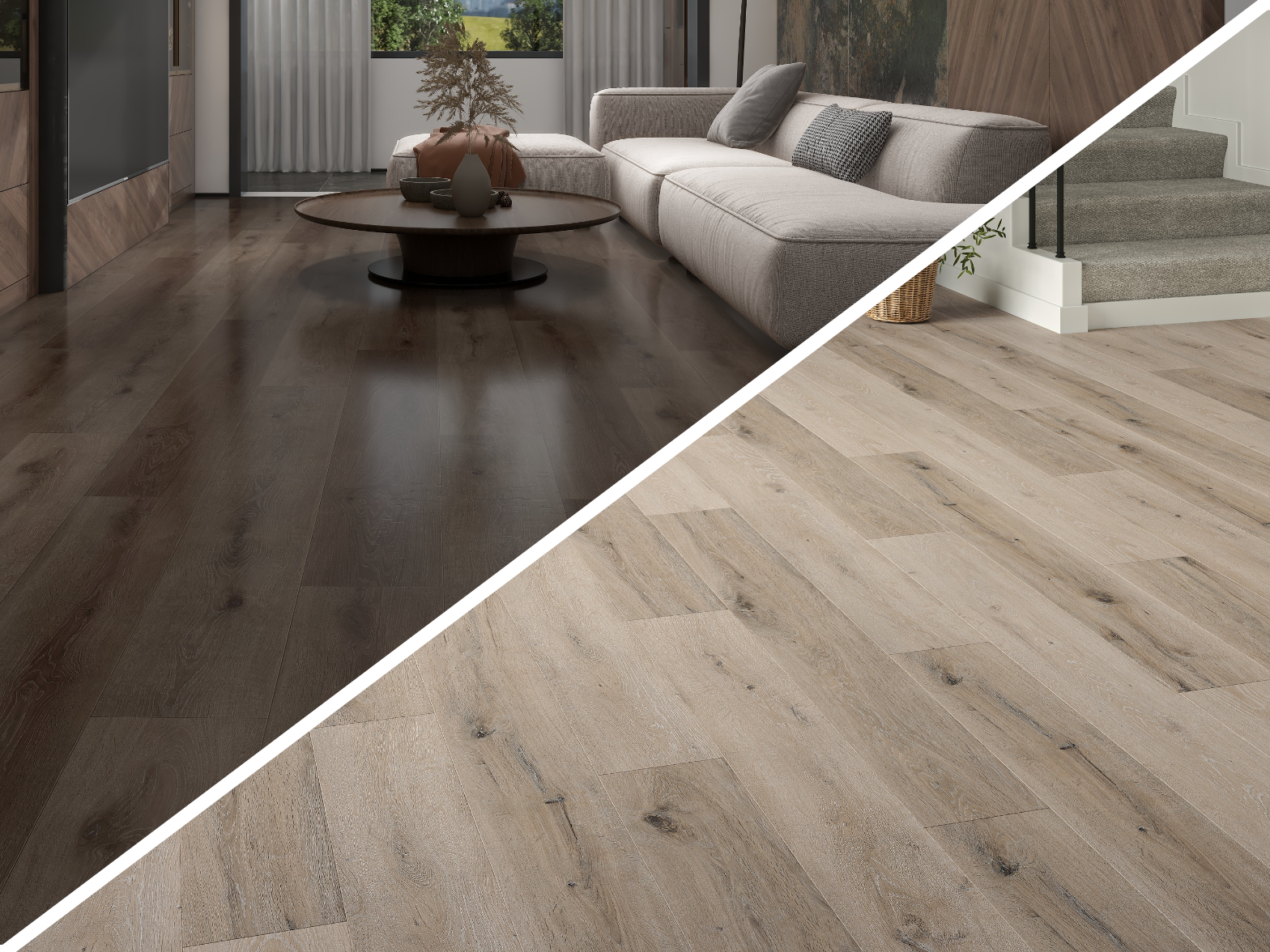
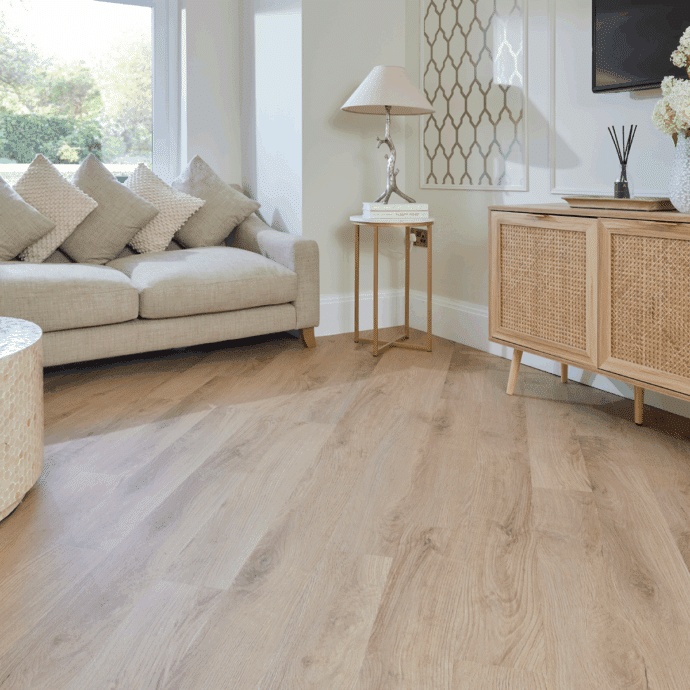
What Is LVT Flooring?
LVT stands for Luxury Vinyl Tiles, a resilient flooring type designed to replicate the look of wood, stone, or tile. It’s made in layers: a protective wear layer on top, a printed design layer for the visual finish, and a vinyl body/backing underneath that gives the floor its structure.
In many homes, the best-known format is stick-down LVT, which is fitted directly to a prepared subfloor. This creates a low-profile finish that works well where floor height is limited or where you want a smooth transition between adjoining rooms. For those that prefer a floating floor installation, click LVT is also available and can be a practical alternative depending on your subfloor and fitting preference.
LVT is often chosen for areas where underfoot comfort matters, as it can feel a little softer and quieter than more rigid alternatives. As you compare LVT vs SPC, this flexible construction is one of the main differences that shapes performance and feel.
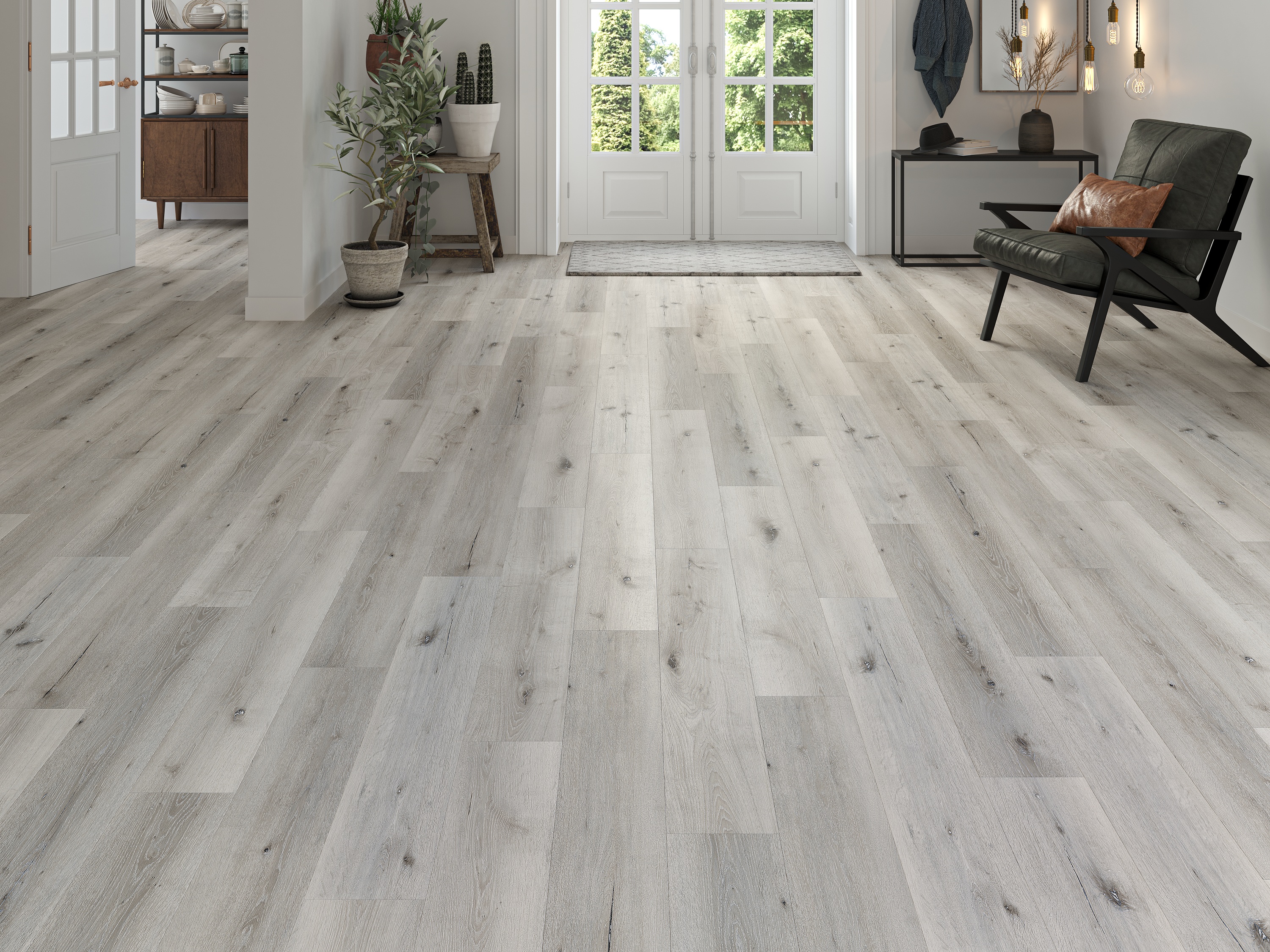
What Is SPC Flooring?
SPC stands for Stone Plastic Composite and sits within the rigid core branch of vinyl flooring. In simple terms, SPC flooring is a multi-layer floor built around a dense core that combines vinyl with mineral content (often limestone), with a design layer and protective wear layer on top.
When people describe SPC as “rigid,” they mean the board has less flex than traditional glue-down LVT. In everyday use, that usually translates to better dimensional stability, strong resistance to dents from point loads (like furniture legs), and dependable durability in busier parts of the home.
SPC is best understood as a specific type within the broader vinyl flooring family, rather than a completely separate material category. In an SPC vs LVT comparison, the core construction is the key distinction - and it’s often what drives the final choice for each room.
Composition Differences Between LVT and SPC
The biggest construction difference is that SPC uses a rigid core, while traditional LVT is more flexible. That single difference affects how each floor behaves once it’s down. Here’s a breakdown of what you’ll notice between the two:
-
Underfoot feel: Flexible LVT usually feels slightly softer and a bit warmer underfoot. SPC tends to feel firmer because of its dense core.
-
Subfloor imperfections: SPC can tolerate minor unevenness a little better than flexible LVT, although neither product hides poor preparation. A smooth, level base still matters.
-
Indentation behaviour: SPC generally offers stronger resistance to dents from concentrated weight, such as heavy furniture or appliances.
-
Noise and comfort: Flexible LVT often has a quieter, more cushioned feel when walking. SPC can sound a little harder underfoot unless paired with suitable underlay (where product specifications allow it).
It’s also worth keeping in perspective that while core type is important, it isn’t everything. The wear layer (which protects the surface from day-to-day wear) and the quality of installation are just as influential for long-term results. A well-fitted floor with a solid wear layer will usually outperform a poorly fitted premium product, whatever the category.
Installation Of SPC vs LVT Flooring
When choosing between SPC or LVT flooring, installation method is often a deciding factor.
SPC is very commonly installed as a click-lock floating floor, with boards that connect to each other rather than being fixed directly to the subfloor. In many projects, this helps speed up fitting and reduce disruption.
LVT is available in both major formats: glue-down (stick-down) and click. Glue-down LVT is bonded directly to the subfloor and is often chosen for a low-profile, very stable finish, especially across larger connected spaces. Click LVT, on the other hand, offers a floating installation route similar in feel to click SPC, and is a strong option for customers who want the convenience of a locking system within an LVT design range.
That said, all formats still depend on proper subfloor preparation. Glue-down floors are especially reliant on a smooth, level base, while click systems can sometimes be more forgiving of minor imperfections (within product tolerances). Installation time can also vary: click floors are often quicker to fit, while glue-down can involve more prep and adhesive curing.
Contact Us Today
For long-term practicality, repair methods differ by format and board location. Glue-down can allow targeted single-plank replacement (dependent on board location, locking profile and the installer method), while click floors may require partial uplift to reach a damaged board. Build height is another factor: lower-profile glue-down constructions can make room-to-room transitions easier, while floating floors may need more threshold planning.
Best Use Cases For LVT or SPC
The right choice in an SPC vs LVT comparison often comes down to how each room is used, rather than which label sounds “better” on paper.
-
For kitchen and utility areas, both can work well thanks to strong moisture resistance, but installation quality is key around edges and joins.
-
In living rooms and bedrooms, many people prefer the slightly softer, quieter feel often associated with glue-down LVT, especially where comfort underfoot is a priority.
-
In high-traffic family spaces, SPC’s rigid core can be a practical advantage where there’s heavy footfall, busy routines, or greater risk of dents from furniture and dropped items.
-
For rooms with temperature variation - such as sun-exposed spaces or intermittently heated areas - SPC is often considered for its stable rigid construction, though this should always be checked against the product specification.
Is There a Visual Difference?
The design choice is strong in both categories. You’ll find a wide range of wood and stone effects, along with varied plank and tile sizes to suit different room styles.
What makes a floor look realistic is less about whether it’s labelled SPC or LVT, and more about the quality of the detail. The biggest factors are print definition, surface texture (embossing), edge profile (including bevelled edges), and the overall finish level. These are the features that create depth, variation and a more natural look once the floor is fitted.
So while product ranges differ by brand and price point, there isn’t a simple rule that one category always looks better than the other. In practice, visual realism usually comes down to the specific product you choose and your preference!
.jpg)
Maintenance and Long-Term Care
Both SPC and LVT are straightforward to look after. For everyday cleaning, a regular sweep or vacuum (with a hard-floor setting) plus a damp mop is usually enough. Make sure to use a suitable vinyl-floor cleaner.
Long-term performance depends on a few basics done consistently: choose an appropriate wear layer for how busy the space is, use entrance matting to reduce grit, clean up spills promptly, and make sure the floor is installed correctly from the start. Good installation protects joins, helps stability, and reduces avoidable wear issues later.
A few habits are worth avoiding: abrasive pads or cleaners that can dull the surface, leaving excess standing water around plank joins, and dragging heavy furniture directly across the floor. Felt pads under furniture and careful moving practices can go a long way in keeping the finish in good condition over time!
So, Which Is Right For You - SPC or LVT Flooring?
There’s no universal winner in the LVT vs SPC debate - only the right fit for your home and how you use it. The best choice depends on your room type, subfloor condition, preferred feel underfoot, and whether a click or glue-down installation suits your project better.
If you’re still weighing up your options, it helps to compare real samples side by side and check product specifications in detail, especially wear layer, installation requirements and suitability for each room. We’d be happy to offer you free samples on many of our options, where you can order up to four completely free - with free delivery!
FAQs
What is the main difference between SPC and LVT flooring?
The main difference is the core structure: SPC has a dense rigid core, while traditional LVT is more flexible. That affects feel underfoot, how each handles subfloor variation, and where each is most practical to install.
Is SPC better than LVT?
Not universally - SPC is often preferred for rigidity and dent resistance, while LVT is often chosen for comfort and a lower-profile glue-down finish. The better option depends on your room use, subfloor condition, and installation priorities.
Does SPC or LVT feel softer underfoot?
In many cases, traditional glue-down LVT feels slightly softer and quieter underfoot than rigid SPC. The exact feel can still vary by product build, backing, and what it’s installed over.