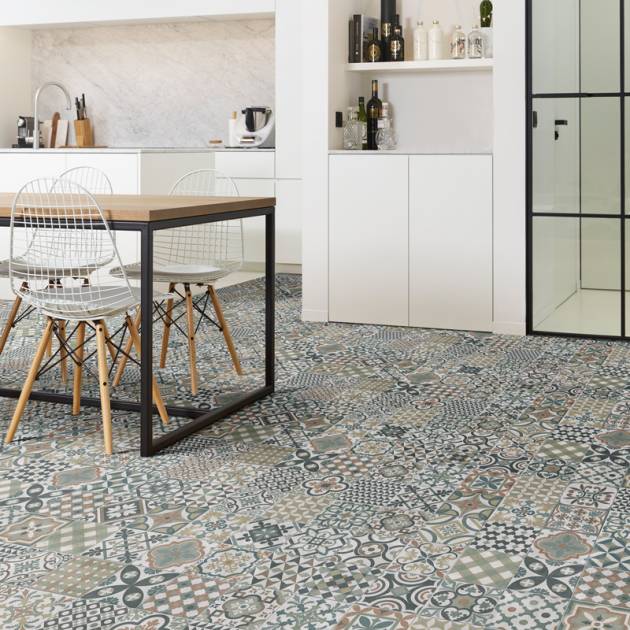
What Flooring Is Suitable for My Kitchen?
Best vinyl flooring for busy family kitchens
A busy family kitchen is the hardest room in the house for any floor. It needs to stand up to dropped pans, spilt milk, muddy paws, pulled-out chairs, heat from ovens and the steady grit of daily footfall – often all in the same afternoon. The four properties that matter most, in order: scratch resistance, spill resistance, slip resistance and heat tolerance near the oven.
Three stocked picks that deliver on all four:
Scratch-resistant LVT (click or glue-down)
Karndean Knight Tile and Amtico Spacia both carry 0.3 mm commercial-grade wear layers and realistic wood or stone visuals. The best long-term choice for family kitchens expecting years of heavy use.
Spill-resistant SPC click vinyl
Rigid-core stone polymer composite planks are fully waterproof, handle dropped pans without denting and install in a day over existing hard floors. Aqua-Step and Superior Wood SPC are our most-specified ranges for family kitchens.
Budget cushion-backed sheet vinyl
Florence Chequerboard, Rhinofloor Elite and Beauflor sheet vinyls give you a fully waterproof, seam-free finish. The right choice for rental properties, first homes or kitchens on a refresh cycle of 6–10 years.
Choosing the right kitchen flooring can be quite the balancing act. You want something that looks great and withstands the daily tasks of being the heart of the home. Below we break down the most suitable flooring options for kitchens, including the positives and things to consider for each, to help you make the right choice for your space and lifestyle.
1. Luxury Vinyl Tile (LVT)
LVT is one of the most popular flooring choices for kitchens, and for good reason. It is water resistant, durable and comes in a wide range of styles that mimic natural wood, stone or ceramic.
Positives
- Waterproof
- Suitable with underfloor heating
- Stain resistant
- Easy to clean and maintain
- Hard-wearing
Things to consider
- Needs a flat, well-prepared subfloor
- Dry-back LVT is best fitted by professionals – click LVT is more DIY-friendly
Everyroom Identity Stone LVT – a hard-wearing collection of stone designs suited for heavy domestic (class 23) and light commercial (class 31) areas. Super slip-resistant (R10 rated) and fitted using the glue-down method.
2. Laminate Flooring
Modern laminate has come a long way. With a tough wear layer and realistic finishes, it is a stylish and affordable option for busy kitchens.
Positives
- Scratch-resistant and hard-wearing
- Some modern laminates are water resistant
- Easy to install
- Easy to maintain and clean
Things to consider
- Not all laminate is water-resistant – choose one specifically rated for kitchens
- Standing water can cause damage if left too long
Furlong Flooring River Water Resistant Laminate – a hard-wearing, sustainably sourced laminate with Uniclic system for faster fitting and bevelled edges. Water resistant for up to 72 hours, FSC forestry sourced with Blue Angel environmental certification.
3. Engineered Wood
If you love the look of natural wood but want better performance in a kitchen environment, engineered wood is a great middle ground.
Positives
- Real wood surface with added stability
- More resistant to moisture than solid wood
- Adds warmth and character
- Sustainable
Things to consider
- Not fully waterproof
- Needs proper maintenance to last
- Will expand and contract with heat and cold
Woodpecker Goodrich Cotton Oak Parquet Engineered Wood – an elegant real wood floor, 15 mm thick with a solid oak 4 mm top layer, bevelled edges on all four sides. Suitable for use with underfloor heating when fully stuck down.
4. Sheet Vinyl
Sheet vinyl offers a seamless, water-resistant surface that is perfect for busy households. It is soft underfoot, easy to clean and budget friendly.
Positives
- Budget-friendly
- Comfortable and quiet
- Moisture and stain resistant
- Many designs and patterns
Things to consider
- Can be damaged by sharp objects or heavy appliances
- Limited repair options if damaged
Florence Tile Vinyl by Remland – a stunning 2 mm thick diamond chequerboard design with a durable 0.20 mm wear layer. Super slip-resistant (R10 rated) and available in widths of 2 m, 3 m or 4 m.
Which kitchen flooring is right for you?
Every kitchen is different, so your flooring should reflect your household's needs. Here is a quick summary:
Busy family kitchens, open-plan spaces
Style on a budget, low-moisture areas
Stylish kitchens with good ventilation
Budget-friendly, low-maintenance households
Kitchen flooring FAQs
Is vinyl flooring safe for children?
Yes. Modern vinyl flooring sold in the UK is tested to EN 14041 for indoor emissions (formaldehyde, VOCs), and the best commercial-grade ranges carry FloorScore certification for indoor air quality. Vinyl is also warmer underfoot than ceramic tile and more forgiving of falls than laminate – both useful in a kitchen where young children spend meal times. Always ventilate for 48 hours after a new vinyl is fitted to let any residual manufacturing odour clear.
Does vinyl flooring discolour near ovens?
Only if the oven leaks heat. Modern freestanding and integrated ovens are insulated to keep external temperatures well within the tolerance of vinyl flooring (most vinyls are rated to surface temperatures of 27 degrees Celsius with short spikes to 45 degrees Celsius). Direct radiant heat from a damaged or poorly installed oven can cause yellowing on lighter vinyls over several years – if you are concerned, check the seal on your oven's base panel or specify an LVT with a higher heat-tolerance rating for the area directly in front of the oven.